
Educators—teachers, instructional coaches, and school leaders—regularly face career and life transitions. Whether relocating, changing districts, or stepping into leadership, these shifts affect finances, family life, and long-term professional growth. When handled strategically, transitions become catalysts for advancement rather than sources of instability.
At a Glance
- Define your five- to ten-year vision before accepting a new role.
- Build financial stability before relocation to reduce stress.
- Research district culture beyond salary schedules.
- Strengthen networks months before making a move.
- Treat every transition as a strategic step, not a reaction.
Preparing for Relocation or District Changes
Career moves often begin with dissatisfaction, opportunity, or personal necessity. Before applying broadly, clarify what you are actually seeking. Is it instructional autonomy? Administrative advancement? Higher compensation? A healthier culture?
Research must extend beyond compensation charts. Study district strategic plans, leadership turnover, student demographics, and professional development priorities. If possible, connect with current staff to understand daily expectations and support systems.
Before interviewing, define your non-negotiables. Consider:
- Leadership transparency and communication
- Investment in professional development
- Class size and student support resources
- Evaluation systems and contract clarity
- Community engagement expectations
Strengthening Professional Networks Early
Waiting until arrival to build relationships limits opportunity. Networking should begin well before relocation.
Professional connections provide mentorship, job intelligence, and cultural insight. Reconnect with former colleagues who have transitioned districts. Join state associations in your subject area. Attend virtual events hosted by prospective districts.
To build momentum before your move:
- Identify three educators in your target district or region.
- Reengage two mentors aligned with your long-term goals.
- Participate in one professional association event before relocating.
- Update your portfolio and professional profiles with measurable impact.
When you begin a new role with existing relationships, your transition accelerates.
Stabilizing Finances Before a Move
Relocation often brings dual housing payments, moving costs, licensing transfers, and payroll gaps. Financial strain can undermine even the most promising professional opportunity.
Create a detailed transition budget that includes deposits, transportation, credentialing fees, and at least two months of living expenses. Strengthen your emergency fund whenever possible.
Planning for professional development is equally important. Graduate coursework, certifications, and conferences require financial foresight. Some educators consider a cash out refinance to pay off debt, which can replace high-interest obligations with a lower-rate mortgage while providing funds to consolidate liabilities or build a financial cushion. Qualification typically requires a credit score of 620 or higher, sufficient home equity, steady income, and a manageable debt-to-income ratio. While this strategy can reduce monthly payments and increase cash flow, it should be evaluated carefully against long-term mortgage commitments.
The objective is stability—not perfection—so that professional focus remains strong during the transition period.
Aligning Transitions With Long-Term Goals
Not all advancement is forward movement. Each career decision should align with a broader trajectory.
If your goal is administration, seek districts with leadership pipelines and mentorship structures. If curriculum design interests you, prioritize systems that encourage teacher-led innovation. If work-life balance matters most, examine after-hours expectations and staffing levels.
Below is a simple evaluation framework:
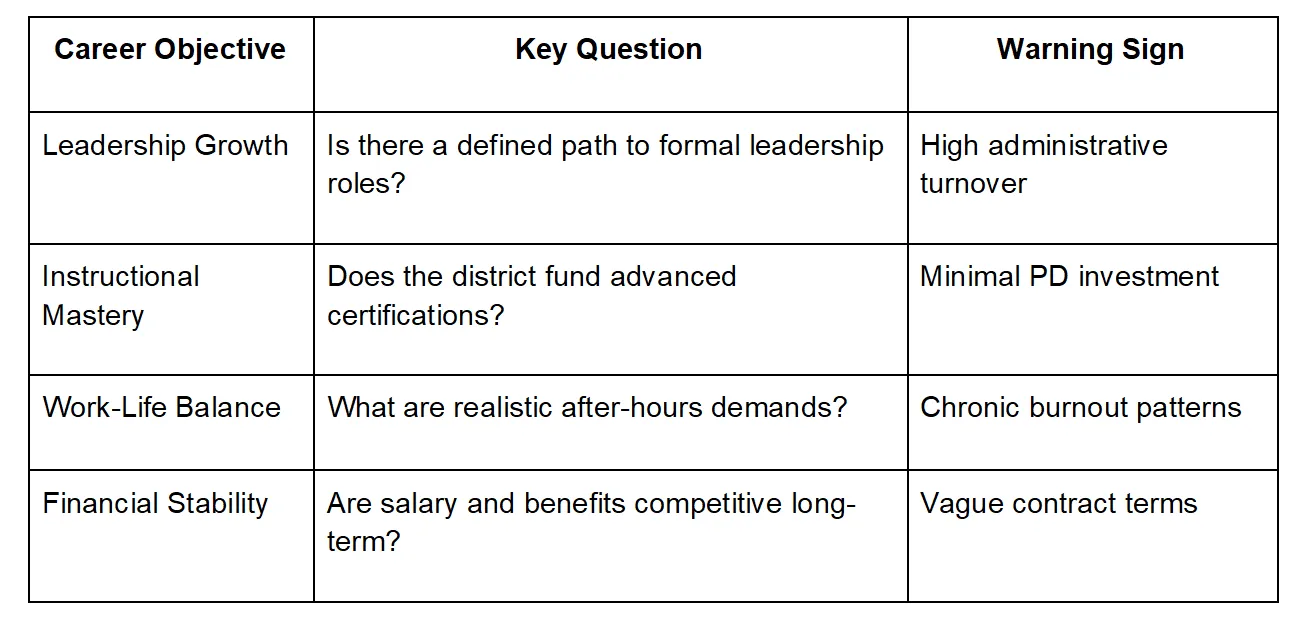
Alignment builds momentum. Misalignment creates repeated transitions.
Transition Planning Roadmap
Intentional preparation reduces uncertainty and increases confidence.
- Write a clear five-year professional objective.
- Research three potential districts in depth.
- Build a relocation and licensing budget.
- Secure updated letters of recommendation early.
- Conduct informational interviews before formal interviews.
- Draft a 90-day impact plan for your new role.
Strategic preparation transforms change from disruption into opportunity.
Educator Career Transition FAQs
Before finalizing a decision, educators often need clarity on risk, timing, and execution.
How Early Should I Begin Planning a Move?
Begin six to twelve months in advance when possible. Early preparation allows time to save, network, and research thoroughly. It also positions you competitively during hiring cycles.
What If I Feel Burned Out but Unsure About Leaving?
Separate temporary fatigue from structural misalignment. Seek mentorship, adjust workload where possible, and clarify long-term goals before resigning. Reflection reduces reactive decisions.
How Can I Assess District Culture Remotely?
Review board meeting notes, strategic plans, and local reporting. Speak with current or former staff about leadership communication and support systems. Patterns of turnover often reveal cultural dynamics.
Should Salary Be My Primary Consideration?
Compensation matters, but growth potential and culture influence long-term satisfaction. A modest raise in a supportive district may outperform a higher salary in a toxic environment.
What Is the Most Common Transition Mistake?
Accepting an offer without aligning it to long-term goals. Strategic patience often leads to more sustainable advancement.
Conclusion
Career transitions in education are complex but manageable with intentional planning. By strengthening finances, cultivating networks early, and aligning decisions with long-term goals, educators can turn change into advancement. The key is clarity and preparation. When purpose guides the move, growth becomes deliberate rather than accidental.